
Custom Software & App Development
When the spreadsheet has become the system
Custom software is what’s left once a workaround has quietly become how a process actually runs. We help you find out whether that’s really where you are, then scope what fixing it would take.
Fit first
The cheapest custom software is the one you don’t build
There’s a point where a business runs on a workaround — a shared spreadsheet nobody wants to touch, tools that don’t talk to each other, a process only one person fully understands. We’d rather find out together whether you’re actually at that point than discover it partway into a build.
It’s usually the wrong call when a well-configured off-the-shelf tool would do the job, when the process is still changing, or when what’s really missing is a decision about how the process should work — software won’t settle that argument; it will encode it.
Signs you’re already there
- A shared spreadsheet nobody wants to be the one to restructure
- Several tools that don’t talk to each other, bridged by a person
- One employee is the only one who fully understands how it runs
- Manual handling has grown into a cost you could measure in headcount
- Your data exists, but the systems holding it won’t connect
- A workaround has quietly become a single point of failure
What we build
Four kinds of work, and they usually overlap
Most engagements turn out to be a web application with an integration problem attached, or an app with a back end to build first.
-
Custom web applications
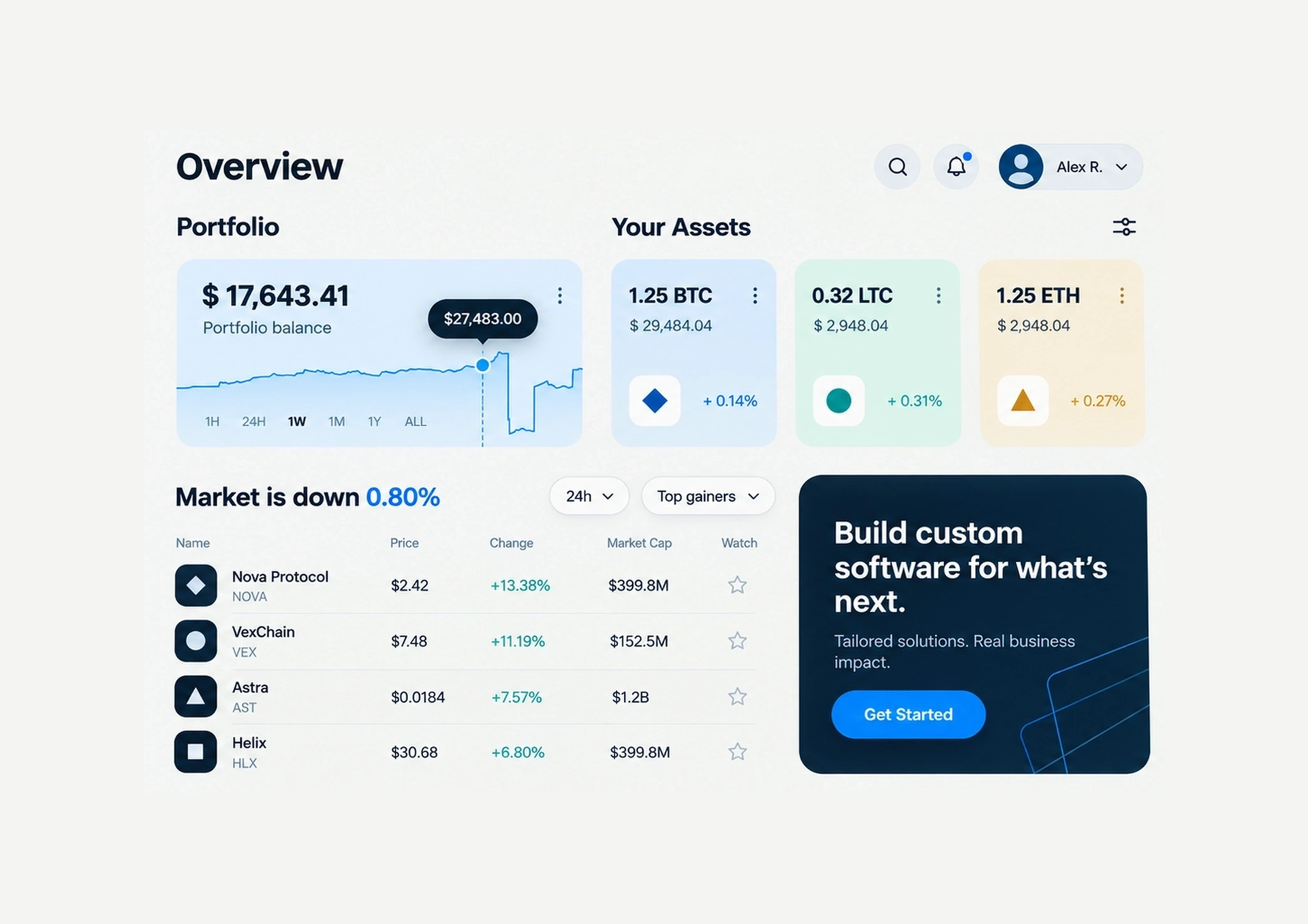
Internal tools, client portals, booking systems and dashboards that pull from several systems into one view — built for the browser, nothing to install.
-
Mobile applications
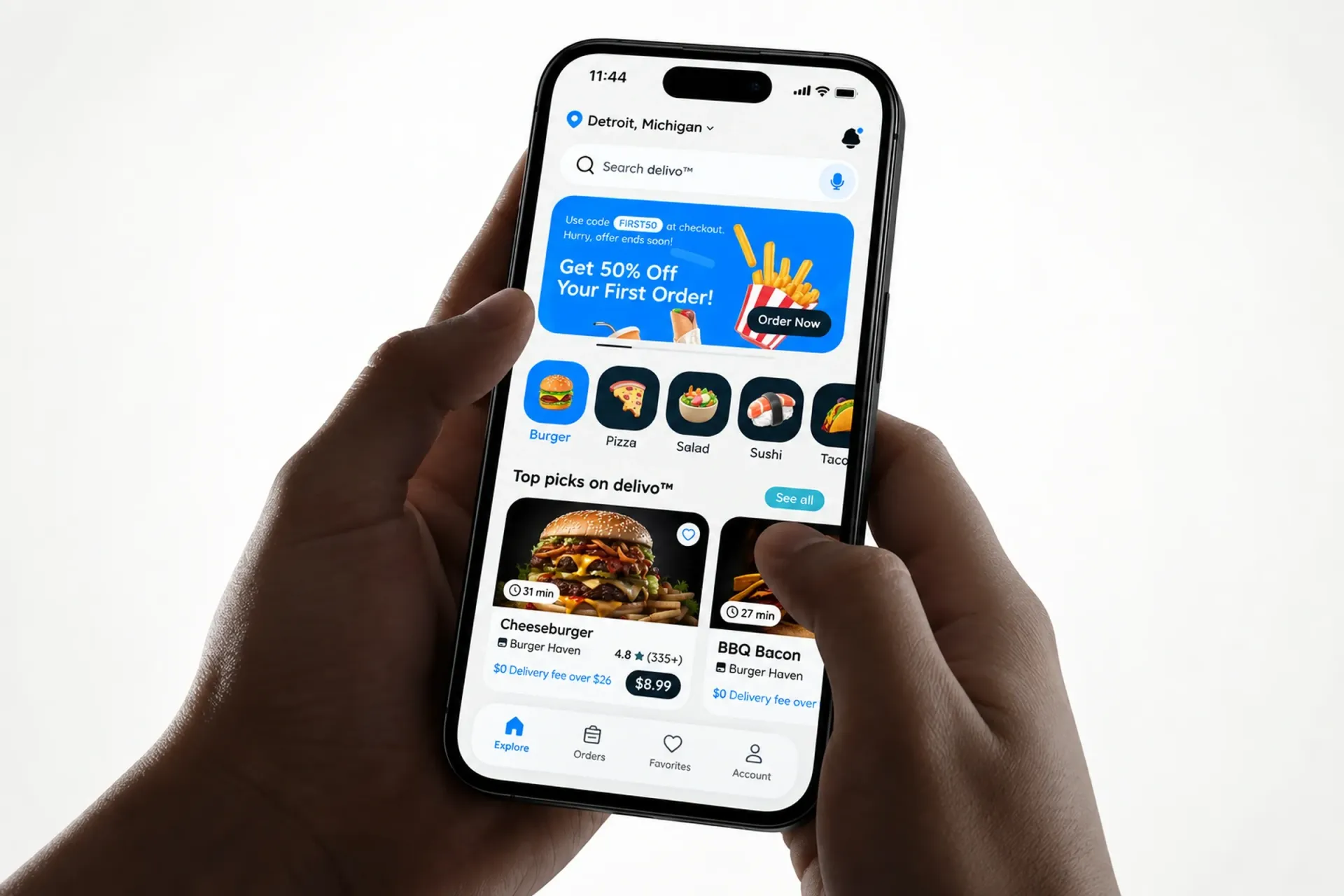
iOS and Android apps can be in scope for work that genuinely happens away from a desk — which platforms make sense is confirmed once we understand the project.
-
API development & integration
Connecting systems that were never designed to talk to each other, and building interfaces that let your own data be used elsewhere.
-
Extending what you run
Not every project is a rebuild. Often the right answer is a targeted addition to a platform you already have — faster and lower-risk than starting over.
How it’s built
Established technology, decided in discovery, not by default
We choose technology per project instead of defaulting to whatever’s newest, because the real question isn’t what’s fastest to build in — it’s who can maintain this if we’re not the ones doing it. Those choices, and how integration, ownership and hosting work, are set out in writing before a project starts.
- Technology chosen and justified per project
- Integrations scoped to the systems you already run
- Source code, repository access and hosting set out in your agreement
- Documentation and handover, scoped as part of the engagement
How we work
Discovery first, defined before anything’s built
Discovery is a scoped, priced piece of work on its own — before anything else is estimated or built.
-
Discovery
We map the process as it actually runs, not as the org chart says it runs. The output is a written specification: what the system does, what it integrates with, and what’s explicitly out of scope.
- Written specification
- Defined scope boundaries
-
Design
Screens and flows agreed on paper before code is written, because moving a button in a design file costs nothing and moving it in a built system costs real rework.
- Agreed screens and flows
- Signed off before build starts
-
Build
Delivered in increments you can see and use, with a working version in your hands early and regularly — never a single reveal at the end.
- Incremental delivery
- Working versions along the way
-
Test & launch
Functional testing, testing with the people who’ll actually use it, data migration where there’s data to move, and a launch plan for the day the old way stops.
- Real-user testing
- Migration and cutover plan
-
Support
Software isn’t finished at launch. Fixes, dependency and OS updates, and the changes that only become obvious once people are using it daily — set out as a defined arrangement, not left open-ended.
- Fixes and updates
- A defined support arrangement
Common questions
Before you enquire
The questions we’re actually asked. If yours isn’t here, ask us — we’ll tell you honestly if this isn’t a fit.
Do we need a written specification before we talk to you?
No. The most useful starting point is a plain description of what currently goes wrong, how often, and who it costs — we’ll tell you honestly whether that’s a build, a configuration of something you already have, or something else entirely.
How do you price something that hasn’t been scoped yet?
We don’t quote from a page. Discovery is a defined, priced piece of work with its own deliverable, and the build is estimated against the specification discovery produces — not against a conversation.
Do you build mobile apps as well as web-based software?
Custom web applications, internal tools, and mobile apps for iOS and Android can all be in scope. Which platforms make sense, and what ongoing app-store maintenance involves, gets confirmed once we understand the project.
Who owns the code, and where does it live?
Two of the most important questions to ask any software firm before signing anything. Source code ownership, repository access and hosting arrangements are set out in your service agreement — ask early, not after the build has started.
Get started
Start with the problem, not the solution
Tell us what’s going wrong today, how often, and what it costs. We’ll come back with an honest view of what it would take — including when the answer is a better-configured tool you already pay for.
- A short description is enough to start
- We’ll say plainly if this isn’t a fit
- Tell us which office you’d like to work with
- Not sure what to build? That’s a fine answer
Custom software enquiry
No guaranteed results. Estimates are based on the scope agreed at the time they’re given; changes to scope affect cost and timeline. New World Web Solutions does not guarantee business outcomes, cost savings, revenue, app-store approval, or the continued availability or behavior of third-party platforms, APIs and operating systems that a delivered system depends on. Ownership of deliverables, hosting arrangements and support terms are set out in your service agreement.